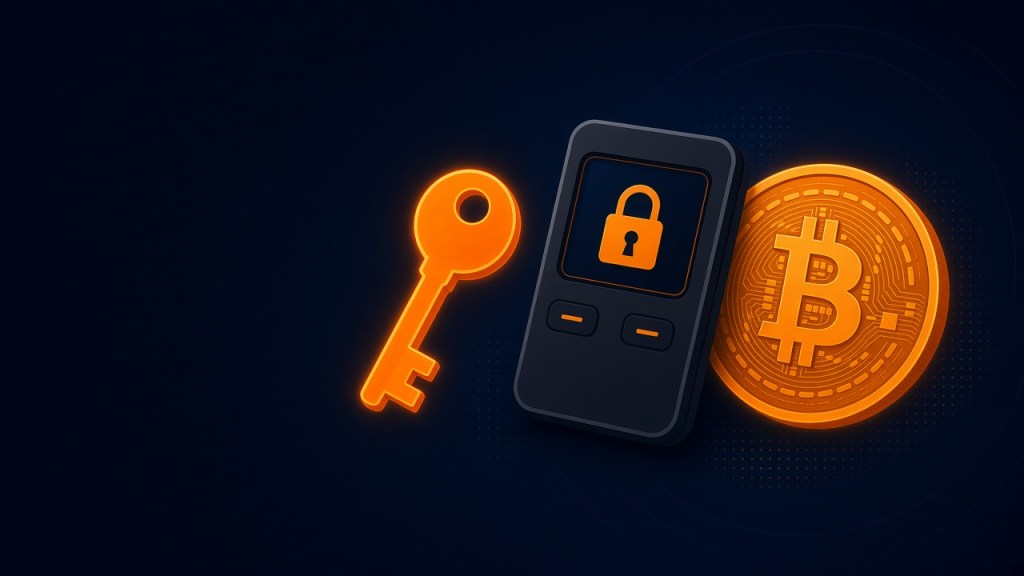
A Bitcoin wallet sounds like a place where your coins sit, the way cash sits in a leather wallet. The real story is a little different, and understanding it is the first step to keeping your bitcoin safe. This guide explains what a wallet really is, the main types, and the simple habits that protect you.
Key Takeaways
- A wallet does not hold coins. It holds the private keys that let you spend bitcoin recorded on the blockchain.
- Hot wallets are connected to the internet and convenient. Cold wallets keep your keys offline and suit long-term savings.
- Self-custody means only you hold the keys. That removes the middleman, but backups become your job.
- Your recovery phrase can restore your whole wallet. Write it down, keep it offline, and never share it.
A wallet holds keys, not coins
Your bitcoin exist as records on the blockchain. A wallet is an application or device that manages your private keys, the secret credentials that allow you to spend those coins. Your wallet also gives you addresses. An address works like an email address: it is all someone needs to send you bitcoin, so it is safe to share. A private key is more like a password that can never be revealed, because anyone who has it can spend your bitcoin.
In Bitcoin Basics, Jameson Lopp is quoted saying, “The safety of your Bitcoin depends on how well you keep your private keys secure. Lose your keys, lose your coins.” For a quick visual version, see our short video post What is a Bitcoin wallet?.
Hot wallets vs. cold wallets
Hot wallets
A hot wallet runs on a device that is connected to the internet, such as a phone or a computer. It is convenient for everyday payments, but because it is online it is exposed to online attacks.
Cold wallets
A cold wallet keeps your private keys offline. A hardware wallet, a small device built to do nothing but protect keys, is the common example. Bitcoin.org calls hardware wallets the best balance between very high security and ease of use, and says cold storage offers the highest level of security for savings.
Many people use both: a hot wallet with a small amount for spending, and cold storage for savings. Bitcoin.org suggests treating a wallet like the cash in your pocket. If you wouldn’t carry a thousand dollars around, think twice before keeping that much in a phone wallet.
Self-custody and “not your keys, not your coins”
If you leave bitcoin on an exchange, the exchange holds the keys. You depend on that company’s security and its ability to pay you back. If it is hacked, fails, or freezes withdrawals, you can lose access. That is what people mean by “not your keys, not your coins.”
Self-custody means you hold the private keys yourself. No third party stands between you and your bitcoin. The trade-off is responsibility: there is no bank to call if something goes wrong. Many users keep only small amounts with custodians and store long-term savings in a wallet where they control the keys.
Back up your recovery phrase
Most modern wallets give you a recovery phrase, also called a seed phrase. It is a list of words that can fully restore your wallet if your device is lost, stolen, or broken. That also means anyone who gets it can take your bitcoin.
Simple rules to follow
- Write the phrase down and store it offline. Never keep it as a photo or in a cloud service.
- Keep copies in more than one safe physical place, so no single event can wipe out your backup.
- Never share it. No legitimate person, business, or support team will ever ask for your recovery phrase.
- Keep your wallet software up to date.
- Start small while you learn.
There is no undo button. If you permanently lose access to a self-custodied wallet, for example by losing your recovery phrase, no one can recover the funds for you, including developers, miners, and wallet providers.
Related reading: See how our book quote “Bitcoin is a bank in cyberspace” frames owning your own savings.
Sources
- Bitcoin.org: Securing your wallet
- Bitcoin.org: Some things you need to know
- Bitcoin.org: Frequently asked questions
- Bitcoin.org: Vocabulary
Watch on YouTube
Prefer to watch? Try our video Bitcoin Hardware Wallets Explained: A Beginner’s Guide to Cold Storage, then browse the Bitcoin Basics 101 playlist. Subscribe to Bitcoin Basics on YouTube
Learn more in the book: Bitcoin Basics: Understanding the Future of Money Through Quotes is on Amazon and Apple Books.
This post is for educational purposes only and is not financial advice. Bitcoin only, no altcoin coverage.
Stay ahead in the Bitcoin world!
Sign up for our exclusive newsletter for Bitcoin adoption insights, how-to guides, memes, the latest news, and more. Get the book Bitcoin Basics: Understanding the Future of Money Through Quotes wherever you buy books (including Amazon).


Leave a Reply