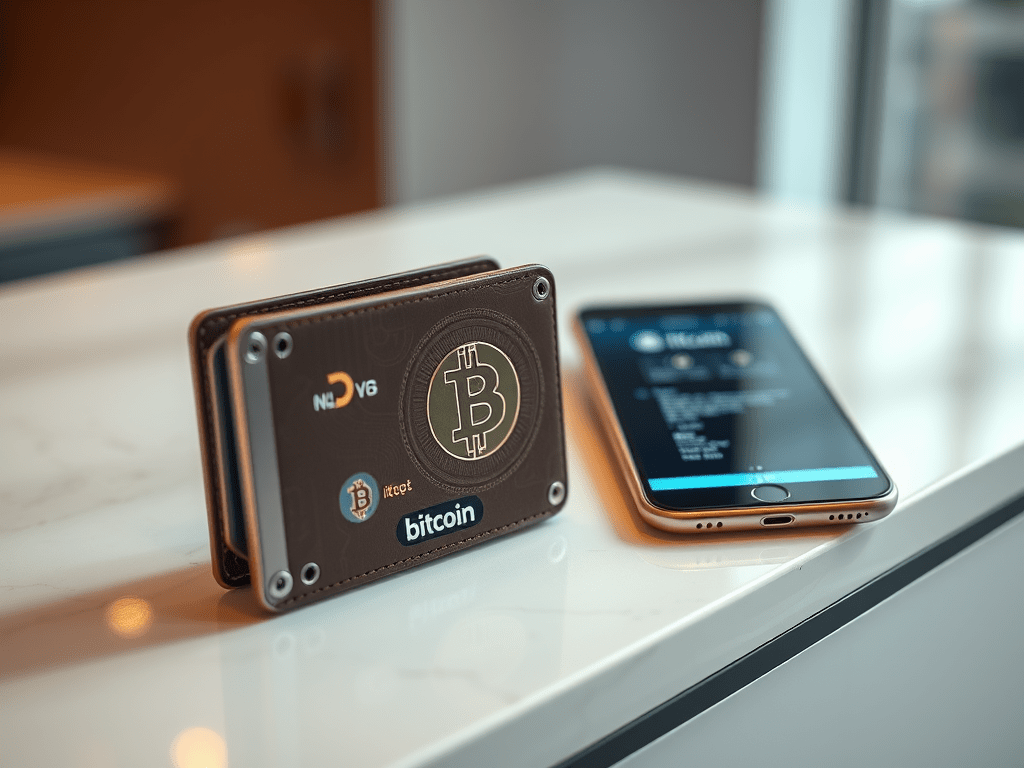
First, Let’s Ground Ourselves: What Is a Bitcoin Wallet, Really?
Before we think about setup, consider this: What do you imagine a “wallet” does in the context of Bitcoin? Is it like a physical wallet that holds cash, or something more abstract?
Reflect on this:
Bitcoin isn’t stored in a wallet like coins in a pocket; instead, a wallet manages cryptographic keys that prove ownership of Bitcoin on the blockchain.
The private key is like a secret password that lets you spend your Bitcoin, while the public key (or address) is shareable for receiving it. Why might understanding this distinction be crucial for a beginner?
(Hint: It ties directly to security—lose your private key, and your Bitcoin could be gone forever.)
If you’re nodding along, ask yourself: Based on what you know about digital security (like passwords or bank apps), what risks might come with handling these keys?
Choosing the Right Type of Wallet: What’s Best for You?
Now, let’s think about variety. There are many types of Bitcoin wallets—hardware (like a USB device), software (apps on your phone or computer), web-based (online services), and even paper wallets (printed keys).
Why do you suppose there are so many options?
What trade-offs might exist between convenience and security?
For instance, a mobile app might be easy for daily use, but could it be more vulnerable to hacks than a hardware wallet that’s offline?
To guide your choice:
What are your goals with Bitcoin?
Are you planning to hold it long-term (like savings), trade frequently, or experiment small-scale?
How comfortable are you with technology—do you prefer something simple like an app, or are you willing to invest in a physical device for extra protection?
Ponder this:
If security is paramount (and for Bitcoin, it often is), why might experts recommend starting with a “non-custodial” wallet, where you control your own keys, rather than a “custodial” one where a company holds them for you?
What could go wrong if you rely on someone else?
Setting Up Your Wallet: Building a Strong Foundation
Once you’ve reflected on your needs, imagine selecting a wallet (we’ll keep it general, as you specified). What steps do you think are involved in creating one?
Start with downloading or purchasing it from a trusted source—why is verifying the source (like official websites) so important?
(Think about malware or fake apps.)
Now, during setup: Most wallets will generate a seed phrase (a series of 12-24 words).
What purpose does this serve?
It’s your backup to recover your wallet if your device is lost or damaged.
Why should you write it down on paper, store it securely (offline, perhaps in a safe), and never share it digitally?
What might happen if someone else gets hold of it?
Ask yourself: How can you test your backup?
(A good practice is to wipe the wallet and restore it from the seed phrase in a safe environment.)
And what about enabling two-factor authentication (2FA) if available—how does that add a layer of defense?
Securing Your Wallet: The Heart of Safe Usage
Security isn’t a one-time thing; it’s ongoing. What habits from everyday life (like locking your door) could apply here? For example, why use strong, unique passwords and avoid public Wi-Fi for transactions?
Consider potential threats:
Phishing scams, where fake emails or sites trick you into revealing keys—what questions should you ask yourself before clicking a link or entering info? Or malware—how might regular software updates and antivirus help?
A thought-provoking angle: Bitcoin is irreversible; once sent, it’s gone.
So, why double-check addresses before sending?
What if you sent to the wrong one—could you get it back?
Using Your Wallet: Receiving and Sending Bitcoin
Let’s move to action.
To receive Bitcoin:
Your wallet generates a public address (like a QR code or string of characters).
Why share this freely, but never your private key or seed phrase?
For sending:
You’ll enter the recipient’s address, amount, and a fee (to incentivize miners).
What factors influence the fee—network congestion, urgency? Why might practicing with tiny amounts first build your confidence?
Reflect:
How does a transaction work under the hood?
It broadcasts to the Bitcoin network, where miners verify and add it to the blockchain.
Why track it via a block explorer (a public tool to view transactions)?
What insights could that give you about confirmations and finality?
Ongoing Learning: Monitoring and Best Practices
As you use your wallet, what metrics might you watch? Balance, transaction history—why regularly review them for anomalies?
Broader question:
Bitcoin evolves; regulations, updates, or new tools emerge.
How can you stay informed—through communities, newsletters, or official sources?
Why start small and scale up as your understanding grows?
You’ve got this—by questioning and reasoning, you’re not just following instructions; you’re truly owning your Bitcoin experience.
 Bitcoin Basics